Silverado 1500 Tongue Weight Limit and Hitch Class, 2019–2026

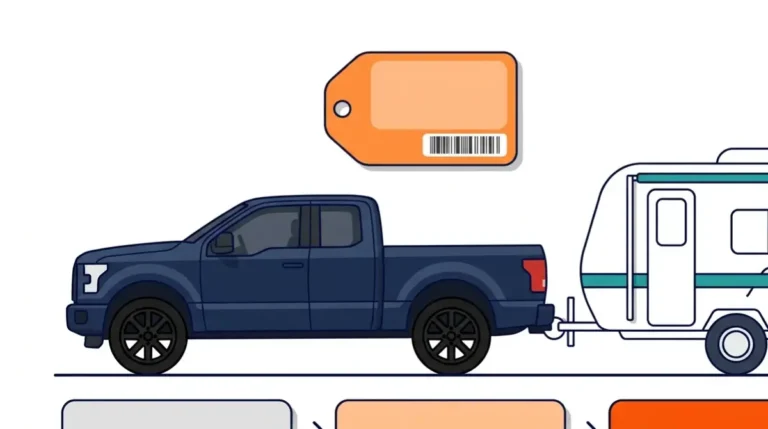
Silverado 1500 hitch class is not a GM rating. Chevrolet’s 2026 guide classes trailers I to V by weight; your tongue limit is on the door-jamb label.

Table of Contents
A 2019–2026 Silverado 1500 has no single tongue weight limit: Chevrolet prints each truck’s maximum on the Trailering Information Label on the driver’s door jamb, and when the trailer sits at the truck’s top rating, the tongue is held to 10% of the trailer’s loaded weight. The engine, the Max Trailering Package (RPO code NHT), the wheel size and the cab and bed set that rating, and the hitch adds its own limit, because GM’s 2019–2023 owner’s manuals require a weight-distributing hitch above 7,000 lb.
Hitch class sits outside all of that. In Chevrolet’s guide it describes trailers, on a parts shelf it describes receivers, and neither use changes what the truck itself is rated to carry.
The figures below come from the 2026 guide. For 2027 trucks, which that guide doesn’t cover, see 2027 Silverado 1500 towing capacity.
10% at the top rating, 10–15% below it
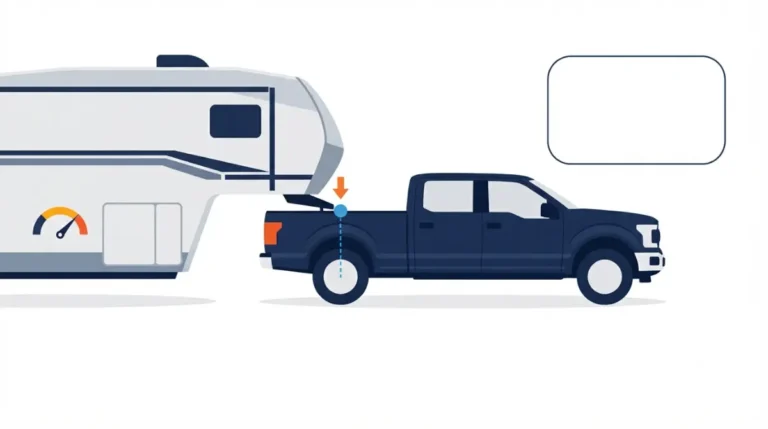
Chevrolet’s 2026 Trailering Guide sets a tongue weight target of 10% to 15% of loaded trailer weight for a conventional trailer, with one exception that matters on a half-ton: at the maximum trailer weight, the tongue tops out at 10%. Gooseneck and fifth-wheel kingpin weight runs 15% to 25%, capped at 15% at the maximum rating (guide, Silverado 1500 trailering notes).
So the closer a trailer gets to the top rating, the less room there is for a nose-heavy load. A camper carrying 14% on its tongue is inside GM’s range at 7,000 lb and outside it at the truck’s maximum.
Two more limits sit on top of the percentage. Added tongue weight can’t take the truck past its rear axle rating (RGAWR), its GVWR or the maximum tongue load printed for it. The trailer ratings also assume a driver and front passenger at 150 lb each plus the required hitch equipment, so extra passengers, cargo and options come off the rating, and the guide’s footnote calls the maximums “intended for comparison purposes only.”
Kingpin hitches have their own frame-mount and payload rules, set out in Silverado 1500 fifth-wheel and gooseneck ratings.
Silverado 1500 tongue weight at each engine’s top rating

Read across a row to see the trailer each 2026 configuration is rated for and the tongue load GM’s 10% rule allows at that weight.
| Engine and package | Applies to (2026) | GCWR | Top conventional rating | Tongue at 10% |
|---|---|---|---|---|
| TurboMax | Regular Cab, long bed, 2WD | 14,500 lb | 9,500 lb | 950 lb |
| 5.3L EcoTec3 V8 | Regular Cab, long bed, 2WD | 15,000 lb | 9,900 lb | 990 lb |
| 5.3L EcoTec3 V8 with Max Trailering | Double Cab standard bed 2WD; Crew Cab short bed 2WD | 16,800 lb | 11,300 lb | 1,130 lb |
| 6.2L EcoTec3 V8 with Max Trailering and 20-inch wheels | Crew Cab, short or standard bed, 4×4 | 19,100 lb | 13,200 lb | 1,320 lb |
| Duramax 3.0L I-6 with Max Trailering and 20-inch wheels | Double Cab, standard bed, 2WD | 19,000 lb | 13,300 lb | 1,330 lb |
| ZR2, 6.2L EcoTec3 V8 | Short bed, 4×4 | 15,000 lb | 8,800 lb | 880 lb |
| ZR2, Duramax 3.0L I-6 | Short bed, 4×4 | 15,000 lb | 8,700 lb | 870 lb |
Source: Chevrolet’s Silverado 1500 conventional trailer weight ratings for 2026, pages 26–27. The last column is worked out at 10% of the published rating.
Every rating in the table is above 7,000 lb, the trailer weight at which GM’s 2019–2023 owner’s manuals start requiring weight distribution (more on that below).
The 20-inch wheels are part of the configuration on both 13,000-lb-plus rows. Check the wheel size on the window sticker before using either figure; other combinations are listed in Silverado 1500 towing capacity by engine, and what NHT adds trim by trim is in the Silverado Max Trailering Package breakdown.
The label on a given truck outranks this table. Its tongue rating is the figure for that VIN.
A Class V receiver doesn’t raise the truck’s limit

Aftermarket receivers for the Silverado 1500 are sold by class, up to Class V, and the higher classes carry tongue ratings that look like a capacity upgrade.
Chevrolet uses the same Roman numerals for something else. Its 2026 guide sorts trailers into five classes by gross weight, from Light-Duty (I) at up to 2,000 lb to Maximum Heavy-Duty (V) at 10,001 lb and above, and names the hitch types each class can use (page 7). The Silverado 1500’s own ratings in that guide are stated in pounds, with no class attached.
Fits but shouldn’t: a receiver rated for more tongue weight than the truck’s label bolts to the frame, but the truck’s tongue limit and rear axle rating stay where the label puts them.
Four ratings meet at the hitch, and the lowest one governs:
- the maximum tongue weight and trailer rating on the truck’s door-jamb label
- the receiver’s weight-carrying and weight-distributing ratings, on its own label
- the ball mount’s rating
- the ball, whose diameter must match the trailer coupler and whose rating must meet or exceed the gross trailer weight (2026 guide, hitch section)
A hitch installer can read the receiver label for you. Ask for its weight-carrying and weight-distributing tongue figures in writing before the trailer goes on.
The 7,000-lb line for a weight-distributing hitch
7,000 lb is where GM’s 2019–2023 Silverado 1500 owner’s manuals switch from optional to required. Up to that trailer weight the manuals list weight distribution as not required. Above it, the hitch is required and set to what the manual calls 50% hitch distribution (owner’s manual, Towing Equipment section).
That 50% has a procedure behind it. Front fender height is measured with the truck unhitched and again with the trailer on the ball, and the spring bars are tensioned until the fender comes back halfway between the two. The manual also holds the rear axle to its rating before the bars go on, so spring bars can’t bring an overloaded axle back inside its number.
For a 2026 truck, GM moved the step-by-step towing instructions out of the owner’s manual and into a separate Trailer Towing Supplement. Read the threshold there for the model year you’re buying.
Where one is required, Chevrolet’s guide calls for a frame-mounted weight-distributing unit with sway control sized for the trailer. Any trailer over 2,000 lb also needs its own brakes on a Silverado (2026 guide, page 6).
Before you hitch: ask the hitch installer to set the spring bars to GM’s halfway fender height and to confirm the bars are rated for the trailer’s loaded tongue weight.
How much payload is left after the tongue?
Take a door-jamb label that shows 1,700 lb of payload, a number used here only as an example. A driver and passenger at 350 lb and 200 lb of gear in the bed leave 1,150 lb for the tongue.
A 9,000-lb trailer at 10% puts 900 lb on the ball and fits inside that payload. The same trailer loaded to 15% puts 1,350 lb on the hitch, 200 lb more than the truck has left, even though 9,000 lb sits below every Max Trailering rating in the table.
The truck’s own payload figure is printed on the same door-jamb label as its tongue limit (2026 guide, page 13). Payload for each configuration is in Silverado 1500 payload capacity by configuration.
Read the door-jamb towing label first
Open the driver’s door and read the Trailering Information Label before buying a receiver, ball mount or spring bars. This label carries the truck’s own maximum tongue weight, alongside its GVWR, GCWR, rear GAWR, maximum payload and curb weight (same guide, page 13).
On a used listing, ask the seller for a photo of it. At a dealer, ask them to read it for the VIN you’re buying, then compare it with the receiver and ball ratings above. Every other figure for the truck is in Chevy Silverado 1500 specs by configuration.
Silverado 1500 hitch questions
How do you measure tongue weight?
Chevrolet’s 2026 guide describes setting the loaded trailer’s tongue on a scale built for the job. Compare the reading with the tongue limit on the truck’s label.
What size hitch ball does a Silverado 1500 need?
The ball’s diameter has to match the trailer’s coupler, and its rating has to meet or exceed the loaded trailer’s weight. Check the trailer’s coupler size and loaded weight before buying the ball.
Does every 2019–2026 Silverado 1500 have a hitch?
Chevrolet’s 2026 guide ties the hitch platform and the 7-pin and 4-pin connectors to the Trailering Package (Z82) where it is available. Look for Z82 on the window sticker or the build sheet for the VIN.
Found this helpful? See more of our guides on Google.
Want to see our guides first on Google?