F-150 lug nut size for alloy wheels, 2015–2026

F-150 lug nuts from 2015 on share one M14 x 1.5 thread with the 2017–2027 Raptor in Ford’s kit listing. On aftermarket alloys, the wheel sets the seat.
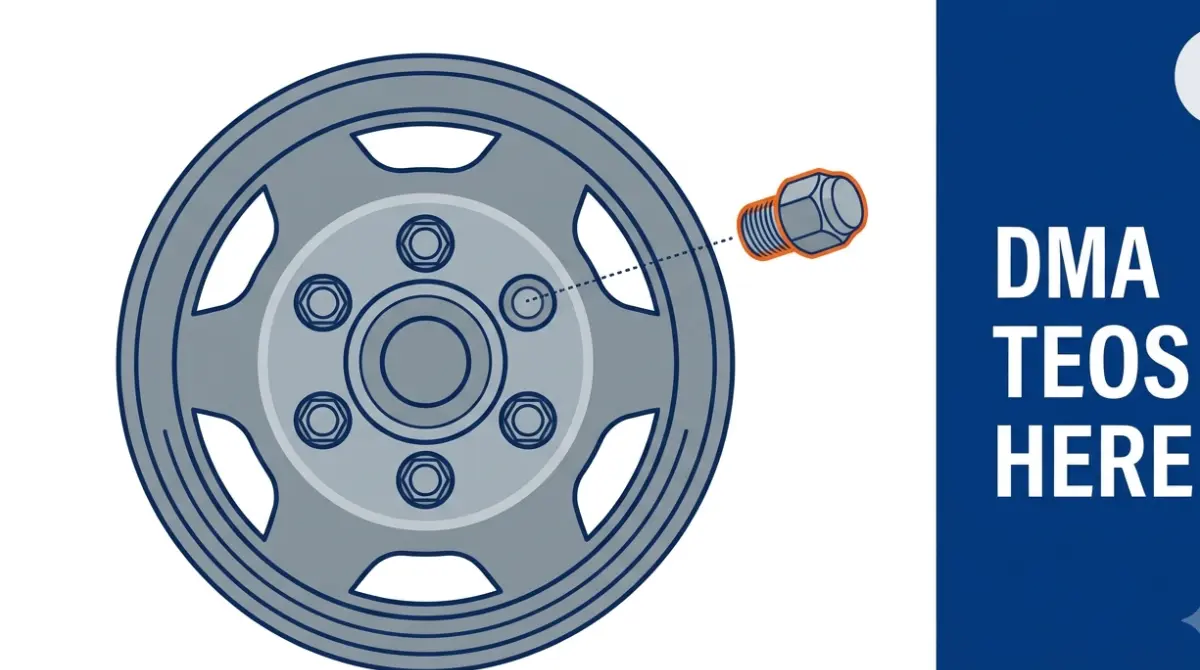
Table of Contents
Every 2015–2026 F-150 runs M14 x 1.5 wheel nuts, six to a wheel. Ford Performance sells one 24-nut kit for the 2015–2027 F-150 and the 2017–2027 Raptor. On alloy wheels, the truck fixes the thread and the wheel fixes the seat shape, so aftermarket alloys can need a different nut from the factory set.
M14 x 1.5 on 2015–2026 studs

Diameter alone won’t tell you whether a used nut matches. The stud in Ford’s 2005 F-150 owner’s manual is M14 x 2.0. That is the same 14 mm diameter, with threads 2.0 mm apart instead of 1.5 mm.
The finer thread runs through Ford’s own paperwork from 2015 on. Only one wheel nut size appears in the 2015 F-150 owner’s manual, and Ford’s performance parts catalog carries that size through the 2027 model year.
| Model years | Trucks | Stud thread | Ford document |
|---|---|---|---|
| 2005 | F-150 | M14 x 2.0 | 2005 owner’s manual |
| 2015 | F-150 | M14 x 1.5 | 2015 owner’s manual |
| 2015–2027 | F-150 | M14 x 1.5 | Ford Performance kit M-1012K-F15B |
| 2017–2027 | F-150 Raptor | M14 x 1.5 | Ford Performance kit M-1012K-F15B |
| 2018–2027 | Expedition, Lincoln Navigator | M14 x 1.5 | Ford Performance kit M-1012K-F15B |
Sources: 2005 F-150 owner’s manual, wheel lug nut specifications; 2015 F-150 owner’s manual, Wheels and Tires technical specifications; Ford Performance M-1012K-F15B listing.
This page doesn’t cover the thread on 2006–2014 trucks. Read any nut from those years with a thread-pitch gauge before it goes near a 2015-or-later stud. To place a used listing’s model year in the right body, use F-150 generations by model year. Bolt pattern and hub bore for each build are in F-150 specs by configuration.
Does a Raptor nut fit a regular F-150?
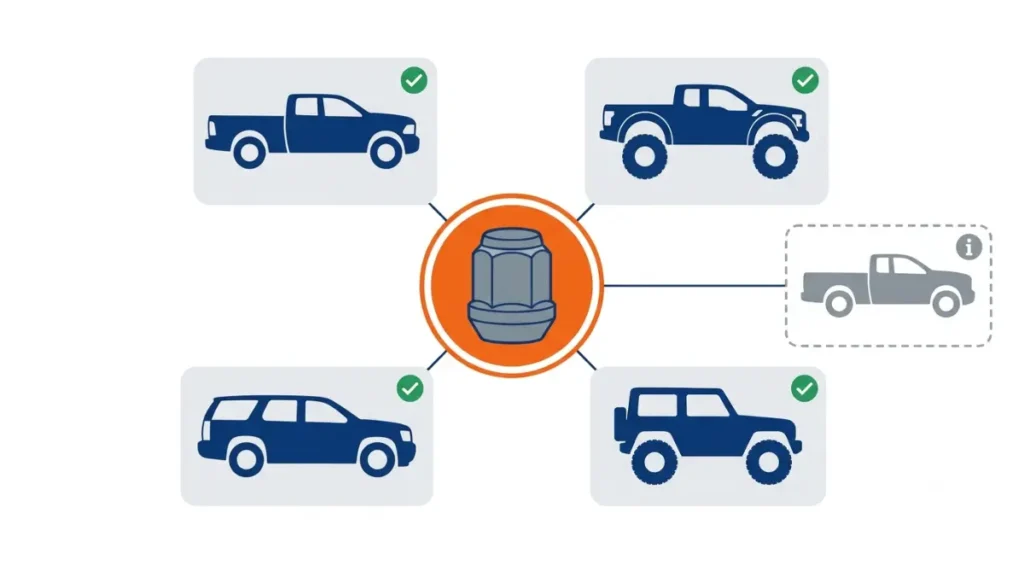
Some wheel and spacer sellers publish charts listing M14 x 2.0 for the Raptor and for certain 2021-and-later engines, the 3.5L EcoBoost and the 5.2L supercharged among them. Ford’s catalog disagrees. One Ford Performance kit covers all of these on the M14 x 1.5 stud:
- 2015–2027 F-150
- 2017–2027 F-150 Raptor
- 2018–2027 Expedition and Lincoln Navigator
- 2022–2027 Bronco Raptor
Where a seller’s chart and Ford’s catalog part ways, go with Ford.
A used 2022 Raptor needs one extra check. Ford recalled 1,519 2022 F-150 Raptors on 37-inch tires because their wheel nuts may have been tightened incorrectly. Dealers tighten or replace the nuts at no charge (NHTSA campaign 22V675000). Ask the seller for the dealer’s repair record, or run the VIN through NHTSA’s recall search before you buy.
The Ford Performance listing doesn’t name the F-150 Lightning, so take the Lightning’s thread from its own owner’s manual. Whether the Raptor’s wheels bolt onto a standard truck is covered in Raptor wheels on a regular F-150. The electric truck’s wheel swaps are in which F-150 wheels fit the Lightning.
Aftermarket alloy wheels set their own seat
Thread pitch comes from the truck. Seat shape comes from the wheel.
The seat is the face of the nut that presses into the lug hole. Wheels use three main shapes:
- a 60-degree cone, sold as acorn, conical or tapered
- a rounded ball or radius seat
- a flat seat with a washer
Circuit Performance, a wheel maker, says most aftermarket wheels take the 60-degree conical seat. Most is a majority. The spec or installation sheet for your wheel has the final say on its seat.
Before the wheels go on, ask the tire shop or installer for the seat type the wheel maker specifies and the minimum thread engagement for that wheel. Also ask whether its lug holes clear a standard hex nut or need a spline-drive nut with a key.
Fits but shouldn’t: Any nut with an M14 x 1.5 thread will run down an F-150 stud, whatever its seat shape. If that shape differs from the seat the wheel maker specifies, the nut is the wrong part for that wheel even though it threads on cleanly. The wheel’s published seat type is the spec that settles it.
Torque figure in the owner’s manual
Ford ties its torque figure to clean threads. For the M14 x 1.5 nut, Ford’s 2015 manual gives 150 lb-ft (204 Nm). That figure assumes threads free of dirt and rust and Ford-recommended fasteners. The manual also calls for retightening to that figure within 100 miles of any wheel disturbance, such as a tire rotation or a wheel change.
On 2016–2026 trucks the figure sits in the same place: the Wheels and Tires chapter, under Technical Specifications. Ford warns that its online manual can differ slightly from the printed copy supplied with the truck, and it treats the printed one as the primary source. Read the number from the manual for your model year.
Some aftermarket wheels come with their own torque instruction. If it differs from Ford’s, ask the installer which figure they will use, and ask for a final pass with a torque wrench.
Read the nut before you order 24 of them
Pull one nut, or read a stud with a thread gauge, before paying for a set. Ford’s kit for these trucks is 24 nuts, six per wheel, so a wrong guess arrives by the box.
Check your own truck: The wheel nut table in your owner’s manual gives the stud size and torque for your model year. On factory alloys, a 2015–2026 truck’s size matches Ford’s M14 x 1.5 listing. On aftermarket alloys, the seat on the wheel’s spec sheet decides which M14 x 1.5 nut goes on.
Found this helpful? See more of our guides on Google.
Want to see our guides first on Google?