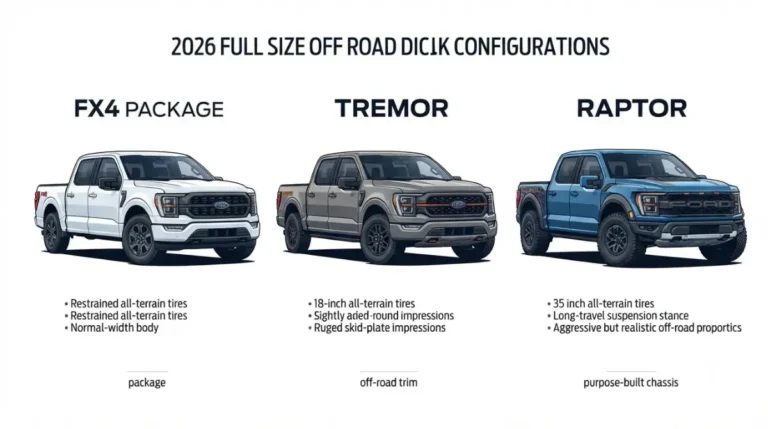
The correct F-150 lug nut size for alloy wheels, 2015–2026
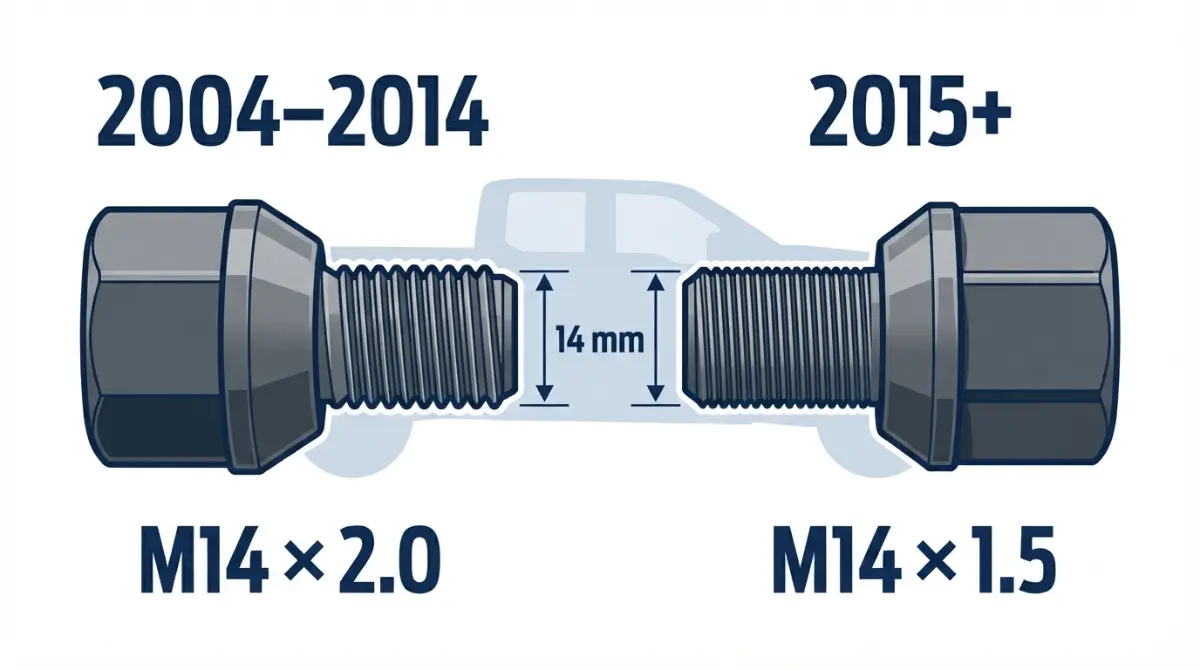
Table of Contents
Ford changed the F-150’s wheel stud thread in 2015, and the two pitches do not interchange. If your truck was built in 2015 or later, its lug nut is M14 x 1.5. Earlier six-lug trucks use a coarser thread.
Three buyers land on this question and need different answers:
- Replacing nuts on your own truck — go to the year table below.
- Buying used wheels off a different-generation F-150 — the wheels and the nuts follow different rules.
- Working out which socket to buy — “size” means three separate specifications, and only one of them decides fitment.
Everything here is scoped by model year, because on this part the year is the answer.
ℹ️ Safety Note: Wheel hardware is what holds the wheel to the truck. A nut with the wrong thread pitch can be turned onto a stud and still fail to clamp, and the failure mode is wheel separation. Treat every figure below as a starting point to confirm against your own truck, not as a purchase authorisation.
📍 Check your own vehicle first: Specifications vary by build date, package and market, and two trucks with the same badge can be built differently. Before you buy anything based on this page, confirm against your VIN at a Ford parts counter or with a thread pitch gauge on a clean stud. If your vehicle disagrees with this page, your vehicle is right.
What “lug nut size” actually means on an F-150
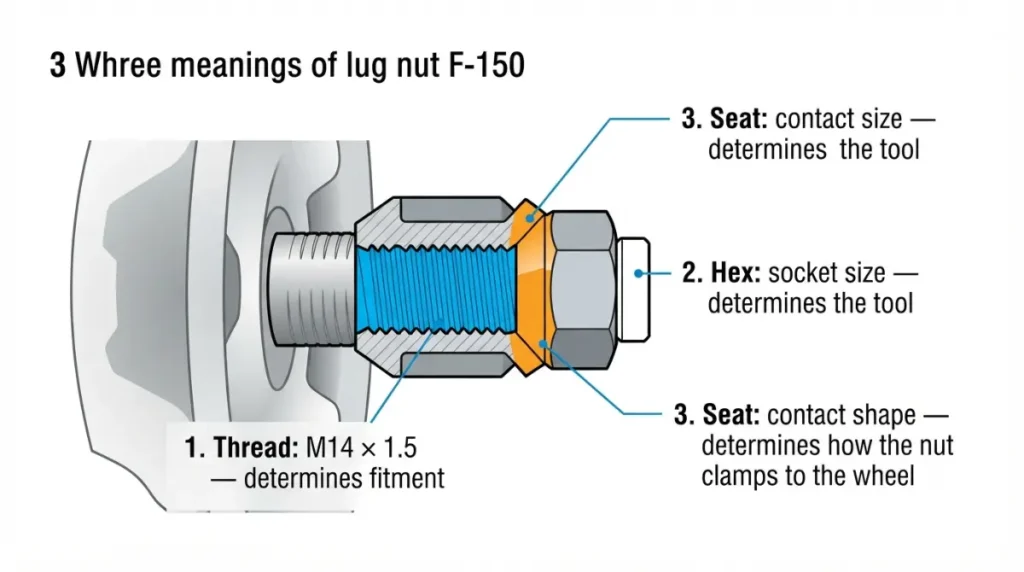
Three separate numbers get called “size,” and buyers routinely shop the wrong one.
Thread size — the one that decides fitment
M14 x 1.5 describes a 14 mm stud with 1.5 mm between thread crests. This is the specification that determines whether a nut belongs on your truck.
📐 On the Spec Sheet: Ford’s 2015 F-150 owner’s manual, Wheels and Tires technical specifications lists bolt size M14 x 1.5 at a torque of 150 lb.ft (204 Nm), with lug nuts retightened to that figure within 100 miles of any wheel disturbance.
Hex size — the socket, not the fitment
Hex size is the flats your socket grips. It is a different measurement from the thread, and it tells you nothing about whether a nut fits.
Seat shape — how the nut clamps
The seat is the tapered face that pulls the nut into the wheel.
🔍 What This Spec Means: The second number is pitch, not a second diameter. M14 x 1.5 and M14 x 2.0 both fit over a 14 mm stud. Only one of them follows the threads already cut into it.
F-150 lug nut thread pitch by model year
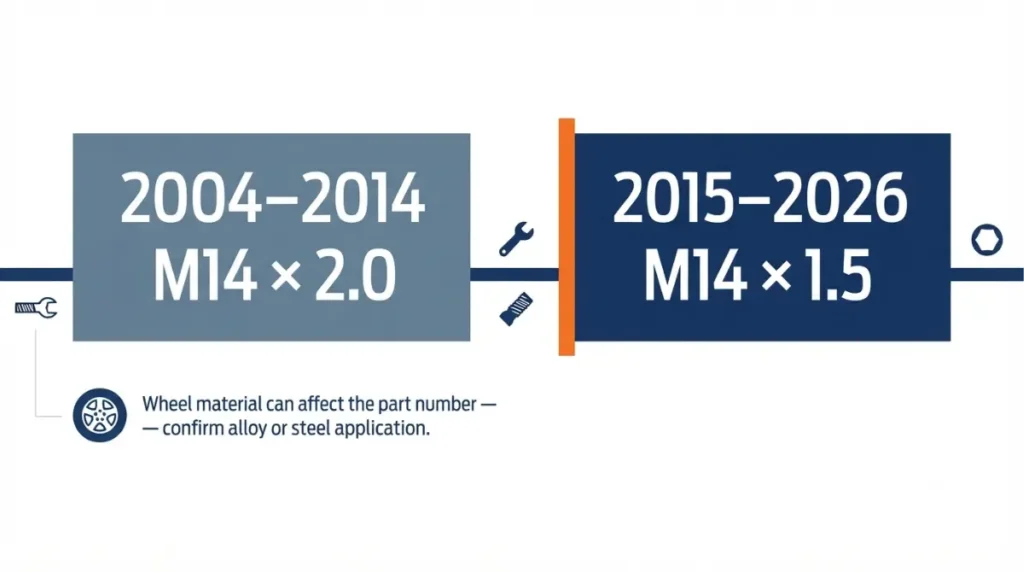
The break point is 2015, and wheel material changes the part you buy.
| Applies To | Thread pitch | What It Includes | Source |
|---|---|---|---|
| 2015–2026 F-150 | M14 x 1.5 | Alloy wheels only | Ford Performance application data |
| 2017–2024 F-150 Raptor | M14 x 1.5 | Alloy wheels only | Ford Performance application data |
| 2018–2027 Expedition / Navigator | M14 x 1.5 | Alloy wheels only | Ford Performance application data |
| 2004–2014 F-150 | — | 2013 F-150 owner’s manual, p. 396 | |
| Steel-wheel trucks, all years | Different part | — | Not yet sourced |
Sourced note: thread and application ranges above are read from Ford’s own parts documentation, not from a retailer fitment tool. The 2004–2014 row is pending confirmation against the Ford-hosted 2013 owner’s manual.
📐 On the Spec Sheet: Ford Performance lists its F-150 lug nut kit, part M-1012-FA as fitting an M14 x 1.5 wheel stud across 2015–2026 F-150, 2017–2024 F-150 Raptor, and 2018–2027 Expedition and Navigator — with the note “For use on alloy wheels only.”
🚫 Fits But Shouldn’t: An alloy-wheel lug nut on a steel wheel. Ford restricts that part number to alloy wheels; the restriction is Ford’s, not an inference. The thread will engage either way, which is exactly why this one gets bought by mistake.
Do F-150 wheels and lug nuts swap between generations?
The two answers point in opposite directions, and that is where money gets lost.
The wheels generally transfer
F-150 wheels have carried a consistent bolt circle and hub bore across these generations, which is why used take-offs move freely on the second-hand market. Confirm the exact pattern, bore and offset for your build against the full F-150 specs-by-configuration guide before buying.
The lug nuts do not
Thread pitch is a property of your truck’s studs, not of the wheels you just bought. A 2015-or-later truck needs M14 x 1.5 regardless of which generation the wheels came off.
Buying used wheels off an older truck
The seller’s nuts usually come taped inside the box. Those belong to the seller’s truck. Buy the wheels, keep your own hardware, and check the seat style matches the new wheel.
What happens if you use the wrong thread pitch
A mismatched nut does not refuse to go on, which is the whole problem.
Why the wrong nut still turns
The thread pitch crests do not line up, so the harder component cuts a new path instead of following the existing one. You get part of a turn, sometimes more, and it feels like progress.
What it costs
Damaged stud threads. The nut can no longer develop correct clamping force, and the stud usually needs replacing rather than chasing.
⚠️ Watch Out: Never test a nut by threading it onto a stud to see whether it fits. That test is itself the damage. Confirm the specification first, on paper or with a gauge.
Two-piece factory lug nuts vs one-piece replacements
Replacement nuts come in two constructions, and the difference is structural, not cosmetic.
How the factory nut is built
A two-piece nut is a steel body with a separate decorative cap over it. The cap is what your socket contacts.
What a one-piece nut changes
A one-piece nut is a single machined body with no cap. The hex your socket grips is the same metal that carries the clamping load.
What you trade
The cap exists for appearance. Removing it changes how the wheel face looks, and a one-piece nut in a plain finish will not match a chrome-capped set. Ford’s own factory F-150 lug nut kit documents the OE replacement specification for alloy wheels.
How to check your F-150’s lug nut thread before you buy
No door-jamb placard carries thread pitch, so this one takes a deliberate check.
Two ways to confirm
- Run a thread pitch gauge across a clean, corrosion-free stud and read the pitch directly.
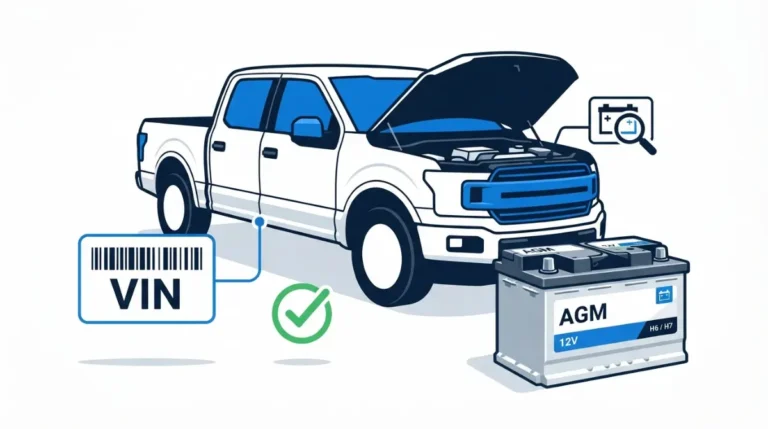
- Give your VIN to a Ford parts counter and have them pull the lug nut part number for your build.
✅ Do This: Ask the parts counter for the lug nut part number tied to your VIN and your wheel material — alloy or steel — because Ford’s own listings separate them. Then confirm the torque specification in your model year’s owner’s manual before anything goes back together. NHTSA’s record of a 2022 recall over F-150 Raptor lug nuts tightened out of specification shows what that figure is protecting against.
F-150 lug nut size: common questions
1. What size are F-150 lug nuts?
Trucks built 2015 and later use an M14 x 1.5 thread, per Ford’s 2015 owner’s manual. Confirm on your own truck first.
2. What year did Ford change the F-150 lug nut thread?
The change lands at the 2015 model year, separating the coarse-thread trucks from every F-150 built since.
3. Is M14x1.5 the same as M14x2.0?
No. Both fit a 14 mm stud, but the thread spacing differs, so they are not interchangeable. Verify before purchase.
4. Will older F-150 lug nuts fit a newer one?
No. A 2015-or-later truck needs M14 x 1.5 regardless of which generation the hardware came from. Check your studs.
5. Do F-150 wheels swap between generations?
Generally yes on bolt pattern and hub bore, but confirm offset and clearance for your build against the configuration guide.
6. What socket fits F-150 lug nuts?
Hex size is separate from thread size and does not determine fitment. Confirm the hex on your own nuts before buying a socket.
7. What happens if I use the wrong thread pitch?
The nut turns partway, cuts the stud threads, and loses clamping force. Never test-fit a nut to find out.
8. Do steel wheels use different lug nuts?
Yes. Ford restricts its alloy-wheel lug nut kit to alloy wheels, so steel-wheel trucks take a different part. Confirm by VIN.
9. Are one-piece lug nuts different from the factory ones?
Yes, structurally: one piece of metal instead of a steel body with a separate decorative cap over it.
10. How do I check my lug nut thread pitch?
Use a thread pitch gauge on a clean stud, or have a Ford parts counter pull the part number by VIN.
Before you buy
Buy to your truck’s thread pitch, confirmed on your truck — not to a listing that advertises a decade-wide year range. The year decides the thread, the wheel material decides the part number, and only your VIN or a gauge settles both. For everything else your configuration changes, the pillar guide carries the full matrix.