How the F-150 STX Lobo package changes towing, tires and hitch

On a 2026 F-150 STX, the 5.0L V8 comes only with the Lobo package, which keeps the hitch but can’t take Tow/Haul or the integrated brake controller.
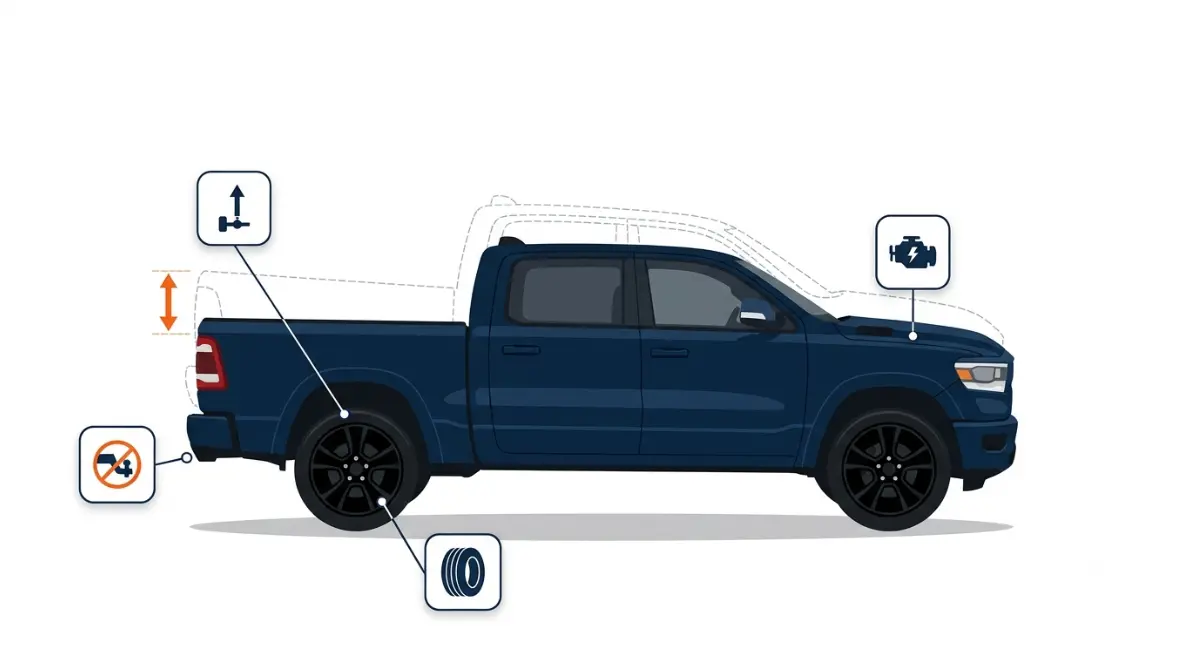
Table of Contents
Specs checked on November 5, 2026 against Ford’s 2026 F-150 order guide, 2026 RV & Trailer Towing Guide and 2027 F-150 technical specifications.
On a 2025–2026 F-150 STX SuperCrew 4×4 with the 5.0L V8 and the Lobo package (option code 19S), Ford’s truck communications team gave maximums of 7,900 lb towing and 1,450 lb payload. The package also rules out Ford’s Tow/Haul Package and swaps the STX’s all-terrain tires for 275/50R22 all-seasons, so the numbers that decide one particular truck are on its door-jamb labels and window sticker.
Four tow ratings circulate for the Lobo, and one is Ford’s
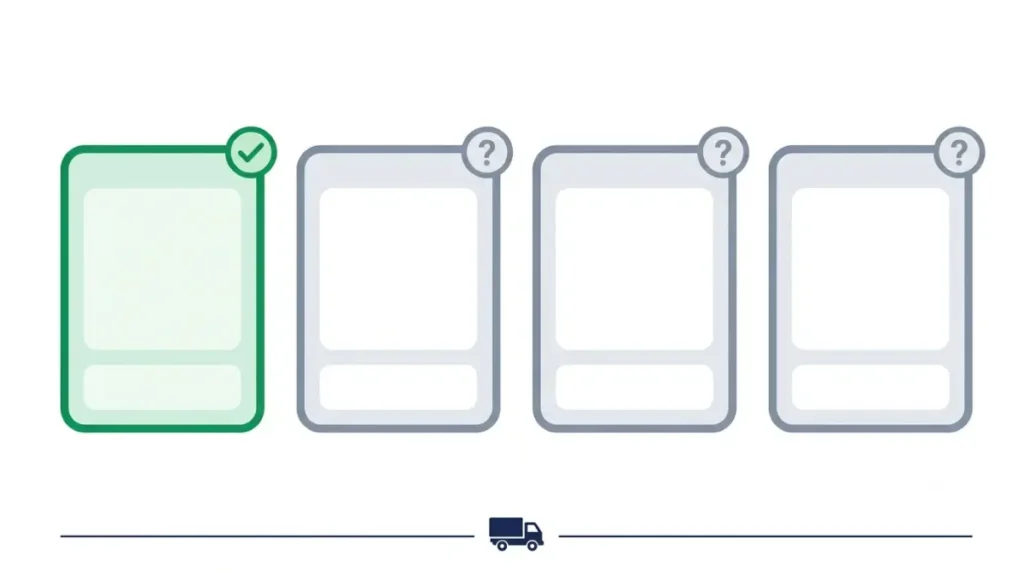
Reviews and listings put 7,900, 8,200, 9,900 and 10,200 lb next to the Lobo name. Only the first came from Ford for this package.
| Figure | Where it appears | What it describes |
|---|---|---|
| 7,900 lb towing, 1,450 lb payload | Ford truck communications, June 2025 | Lobo package, 5.0L STX SuperCrew 4×4 |
| 10,200 lb towing, 1,980 lb payload | A 2026 review | 10,200 lb matches the towing guide’s 5.0L SuperCrew 4×4 row with the 3.73 axle, which carries no Lobo footnote |
| 9,900 lb towing | A dealer listing for a 2025 STX with the Lobo package | No configuration or source given |
| 8,200 lb towing | A 2026 review | No configuration or source given |
Sources: Lobo maximums as confirmed to Ford Authority by Ford’s truck communications manager; 5.0L row from the 2026 Ford RV & Trailer Towing Guide, page 15.
The towing guide has no Lobo row and no Lobo footnote. Anyone who looks up a 5.0L SuperCrew 4×4 with the 3.73 axle in it finds 10,200 lb, and a generic figure ends up printed for a Lobo. Ford hasn’t said which part of the package lowers the rating.
Before you size a trailer to any of these numbers, ask the dealer which Ford document its tow figure for that VIN comes from.
What the package changes on a 2026 STX 4×4
The 2026 order guide offers the 5.0L V8 on an STX only together with the Lobo package. The fair comparison is therefore an STX SuperCrew 4×4 on the standard 2.7L EcoBoost V6.
| Item | STX SuperCrew 4×4 without Lobo | STX SuperCrew 4×4 with Lobo (19S) | Applies to |
|---|---|---|---|
| Engine | 2.7L EcoBoost V6; 3.5L PowerBoost hybrid optional | 5.0L V8, required | 2026 STX SuperCrew |
| 4×4 system | Electronic shift-on-the-fly | Two-speed automatic 4WD, listed in the 2027 specs as mechanical-locking with a Hi-Lock transfer case | 2026–2027 STX SuperCrew 4×4 |
| Rear axle | Set by the order guide’s axle availability chart | 3.73 electronic-locking | 2026 Lobo window sticker |
| Rear ride height | Standard F-150 | 2 in lower | 2025–2026 Lobo |
| Wheels and tires | 18-in gloss black with 275/65R18 all-terrain; 200A group adds 20-in dark gray with 275/60R20 all-terrain | 22-in aluminum with 275/50R22 all-season | 2026 STX 4×4 |
| Tow/Haul Package (53T) | Not available with the 2.7L | Not available with 19S | 2026 order guide |
| Integrated trailer brake controller (67T) | Optional with the 2.7L | Not offered; 67T requires the 2.7L | 2026 order guide |
| Hitch | Class IV receiver, Smart Trailer Tow Connector, 7/4-pin connector | Same, standard | 2026 XL and STX |
Sources: 2026 Ford F-150 order guide (STX pages, dated 04/30/26); a 2026 F-150 Lobo window sticker; Ford’s F-150 Lobo announcement for the rear drop and 4WD; 2027 F-150 technical specifications.
The receiver stays on the truck. The Lobo can’t be ordered with the Tow/Haul Package, which Ford’s guide requires, along with the Max Tow Axle, for gas F-150 trailers over 11,600 lb. That leaves the Lobo with no factory route above its 7,900-lb rating, and a page on what the Tow/Haul Package and Max Tow Axle add shows what other F-150 buyers get from that pair.
Ratings for the other cab, bed and engine pairs in the 2021–2026 lineup sit in the F-150 specs by configuration tables.
How much payload is left after tongue weight?

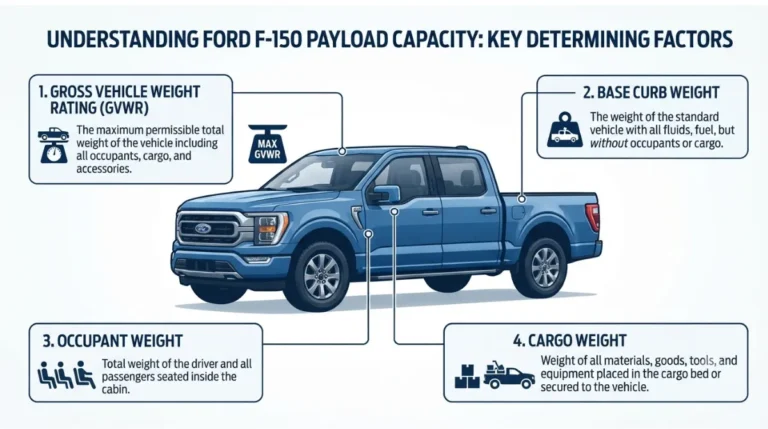
Worked out from the published figures, a 7,900-lb trailer at Ford’s 10% tongue-load guideline puts 790 lb on the hitch. Taken from the 1,450-lb maximum payload, that leaves 660 lb.
Those 660 lb cover the driver, every passenger, anything riding in the bed, the ball mount and any weight-distribution head. With a 150-lb driver and a 150-lb passenger, the occupants Ford’s towing guide assumes when it sets trailer ratings, 360 lb remains. Two more 150-lb passengers bring it to 60 lb.
That arithmetic starts from Ford’s maximum. The figure for one truck is printed on the Tire and Loading Information placard on the driver’s door jamb, and the guide points buyers to that doorjamb label for carrying capacity.
Tongue load plus people and cargo also can’t take the truck past its GVWR or rear GAWR. Both are on the Safety Compliance Certification Label on the driver’s door pillar, according to page 6 of the guide. The 2026 Lobo window sticker cited above lists a 6,800-lb GVWR package.
The same math for other builds is on the page about how payload and tongue weight share the F-150’s limits.
The hitch is rated higher than the truck
Look under the receiver for a label with two sets of numbers. For 2026 F-150 pickups, the towing guide rates the standard 2-inch receiver at 11,600 lb. That is 5,000 lb trailer and 500 lb tongue when weight-carrying, and up to 1,400 lb tongue with weight distribution.
That label is the hitch’s limit. On a Lobo the 7,900-lb vehicle rating is lower, so it governs, and the guide’s chart notes add a second rule: do not tow more than 5,000 lb without a weight-distribution system. Ford also recommends a separate brake system on any trailer over 1,500 lb loaded, and many states require one.
Why the two ratings differ across the lineup is covered in F-150 hitch receiver rating vs. tow rating.
Before you hitch: Ford’s 2026 order guide doesn’t allow the Tow/Haul Package (53T) with the Lobo, and it offers the integrated trailer brake controller (67T) only with the 2.7L. A Lobo built to that guide therefore leaves the factory without a brake controller, and a trailer with electric brakes needs one added. Ask the installer for a controller suited to the trailer’s brake type, and look for a 67T line on the window sticker of any Lobo you’re shown.
275/50R22 tires and the load index on the placard
The size reads as a 275 mm section width, a sidewall 50% as tall as that width, radial construction and a 22-inch wheel. Ford fits it as an all-season on the Lobo, and the 2027 specs list the same size on King Ranch and Platinum.
What the size can’t tell you is how much weight each tire carries. That comes from the service description after the size, a load index number and a speed-rating letter. Ford prints the pair it specified for the truck on the door placard.
Fits but shouldn’t: A 275/50R22 with a lower load index or speed rating than the placard lists mounts on the Lobo’s 22-inch wheel and looks the same from the curb. It carries less. Read both figures from the placard rather than from the tires on the truck, which a previous owner may have changed, and have the tire shop match or exceed them.
Sizes for every 2026 trim are in the 2026 F-150 tire size chart.
Will the lower rear change your ball mount?
Ford’s 2-inch rear drop changes where the truck sits unloaded, and Ford doesn’t publish a receiver height for the Lobo. Measure on the truck itself.
With the trailer level, measure from the ground to the bottom of its coupler. Then measure from the ground to the top of the receiver opening. Ford’s guide says to set the ball at coupler height, so the gap between those two numbers is the drop or rise the ball mount needs.
Weight distribution adds one more measurement. Ford’s F-150 procedure records front fender-lip height before hitching (H1) and after hitching without the bars (H2). The bars are then adjusted until the fender comes back half the difference, which is Ford’s 50% correction factor for the F-150. The steps and a worked example are on page 8 of the towing guide, and setting up a weight-distribution hitch on an F-150 goes through them.
Check the door-jamb label before you sign
Open the driver’s door of the Lobo you’re considering and compare its labels with the trailer you plan to pull:
- The payload on the Tire and Loading Information placard, less 10% of your loaded trailer weight
- GVWR, rear GAWR and the axle code on the Safety Compliance Certification Label; L6 is the 3.73 electronic-locking axle
- The window sticker’s GVWR package line, and whether a 67T brake controller is listed
If the placard payload minus tongue weight won’t carry your passengers and gear, price a different F-150 configuration for that trailer.
Found this helpful? See more of our guides on Google.
Want to see our guides first on Google?